Tuesday, 3 May 2016

Who Are the People in Your Neighbourhood?

Who are your school community heroes? Jarrett J. Krosoczka
Those of you who grew up in the 70s might be familiar with the Sesame Street classic, "Who are the People in Your Neighbourhood?" In addition to a nostalgic stroll down memory lane, it's an important reminder of the number of people who contribute to the well being and success of a community. In a school community, many of these people quietly and efficiently go about their jobs, with little recognition of the integral role they play. But in order to support the often complex needs of our students, to learn their stories, we need to solicit input from all members of our community. We need get to know the "people in our neighbourhood", and ensure that their voices are heard and valued.

Just a few of the many heroes that help to support student success. 
I was recently privileged to speak to an amazing group of educators in Prince George, BC. Through some incredibly open and honest conversations, we were able to identify numerous individuals who contribute on a daily basis to the social, emotional and academic success of our students. But even more important than the compiled "list", was the amount of warmth and appreciation that was being expressed as educators shared story after story of the impact that these individuals had on the lives of their students. I couldn't help but wonder how often those sentiments were expressed to those individual in person... How often do we say "thank you" to the heroes in our school communities?

Simply put, supporting student success is a team sport. We can't do alone, nor should we. I challenge you to take a look around you tomorrow as you walk through the parking lot and halls of your school. Who are the people in your neighbourhood, your school heroes who contribute to the success and well being of your students, and staff? And when was the last time that you said thank you for the important role that they play?

Monday, 25 April 2016

Learning By Accident

                                       "It sounds great. But it's just not what I'm looking for..."
This was the response of a gentleman who'd asked me to give him the "Coles Notes version" of my session as he was trying to decide whether or not he wanted to attend. Please know, I don't in any way take that personally. I appreciate his honesty. And I understand that attending a conference is quite literally an investment- of time and money. Time away from our family, time away from our school communities. An investment in our students. So I understand that people feel the need to be purposeful in choosing which events and sessions they'd like to attend. And my story is not for everyone. I'm ok with that. 

But I've also come to understand over the past several years that much of my best learning happens by accident... It's the impromptu conversations while waiting in line for a coffee. The sessions that I wander into after not being able to find the ones that I originally planned to attend. The chance meetings while waiting for an elevator. I've come to understand that if I allow myself to be open to opportunity, it will find me. Pretty darn cool. 

So having recognized that much of my best learning happens by "accident", I'm purposefully less purposeful in seeking out that "perfect" learning opportunity. I've come to realize that in fact, every experience is an opportunity to learn. And that sometimes, even when I think I might know what I want, instead I tend to find exactly what I need...

Sunday, 10 April 2016

The Quiet Ones

Some students, you just can't help but notice. They're the students whose names you learn first in September. Sometimes it's because they're the first to volunteer to answer a question, or to pick up a notice from the office. And sometimes, it's because they're the one that you've had to ask to stop poking the student sitting next to them, and to please sit down, six times within the first half an hour of class. You know, those ones. For a myriad of reasons, there are students that we just seem to notice.

And then there are the others. The ones who on a busy day, when you haven't gotten to your attendance first thing, you can't quite recall whether or not they were in class. The ones who when the first parent teacher interview comes along in October, you need to look back through your notes to be sure that you're prepared with something to say to the parents. You know, those ones. The quiet ones. For a myriad of reasons, there are students that we just don't seem to notice.

It's hard to write that. It's not something that any educator wants to admit. We do our best to reach out to every student, to learn a little of their story, to support their diverse needs. But with numerous demands on our time, there always seem to be those few students that at the end of a semester, or year, you think to yourself, "I wonder if there was more I could have done?"

The challenge is, that for the most part, the quiet ones tend to do okay. They comply with instructions, follow the daily routines, and make their way through the day without complaint. And yet, they also tend to make their way through their days with very little interaction with their peers. Or with the adults in the building. They are on the periphery our school communities. And that's not ok.

The question that keeps me up at night is, what am I missing if I let the quiet ones slip unnoticed through our hallways day after day? What am I not noticing?

The thing is, I was one of the quiet ones. Those who know me now probably chuckle a little at that... It's not often now that I get described as quiet. But it wasn't until long after school that I began to very consciously push myself outside of that comfortable, quiet place, to find my voice, to feel worthy of being noticed.

And so, as a vice principal of a high school of over 1200 students, and with the help of the members of my school community, I continue to challenge myself to really see those students, the ones who are sometimes doing their very best to remain invisible. Because for that very reason, we need to notice them. Because I don't ever want to ask myself that question again, "I wonder if there was more that I could have done?"


Monday, 28 March 2016

Learning, from Sea to Summit

I learn so much from others. But for me, having the time to process and reflect on what I've learned is essential. Hiking provides me with an opportunity to do just that. It gives me some time to think, offers a good metaphor for some of my insights, and reminds me of how much I still need to learn. 

So, a little of what I have learned...

1. There is difference between taking risks and being reckless. Although it's impossible to prepare for every eventuality, it makes sense to gather as much information before hand as possible. A solid plan and the right tools can make all the difference.
1. My travelling companion. Hiking on my own means I need to take precautions and be prepared.

2. There are times when it's necessary to put your head down and just power through. But there are also times when you need to pause to look up, take a breath, and make sure that you're still on the right path. Sometimes there are clear markers to guide you, and other times the path is less obvious. 
2. Thank goodness for trail markers. 

3. There will be seemingly insurmountable obstacles. But overcoming adversity often leads to innovative solutions and amazing opportunities
3. Can't go over it. Need to go around it. 

4. Periods of darkness and fear are inevitable. There are times when you will be certain that you're on the wrong path, that you're headed in the wrong direction...
4. The creepy part. Reminds me of the forest with the monkeys in the Wizard of Oz.

5. But have faith. Darkness can be followed by great beauty and light
5. So beautiful.

6. Being mindful of limitations is a strength, not a weakness. It is only by recognizing our limitations that we can continue to learn and grow. 
6. Wouldn't it be helpful to have signs like this in life? "Just a heads up, there's some hard crap ahead, so..."

7. Independence and confidence are important. But there are times when you will need some help to continue to move forward
7. I've learned when to grab the rope. 

8. As much as you plan ahead, unforeseen circumstances will arise. Often these are beyond our control. The only thing that we can control, is how we respond
8. Yup. Snow. Awesome.

 9. Take the time to appreciate and celebrate when the path is smooth and things are going well.
9. A different view around every corner.

10. And be grateful for the little things that make the journey a bit less treacherous. 
10. Stairs. Helpful. 

11. It's important to find a balance between looking ahead and staying rooted in the present. Focussing only on the path ahead can cause you to lose your footing. 
11. Sometimes it seems easier to go across the log. Except when it's slippery. 

12. There will always be an easier way...
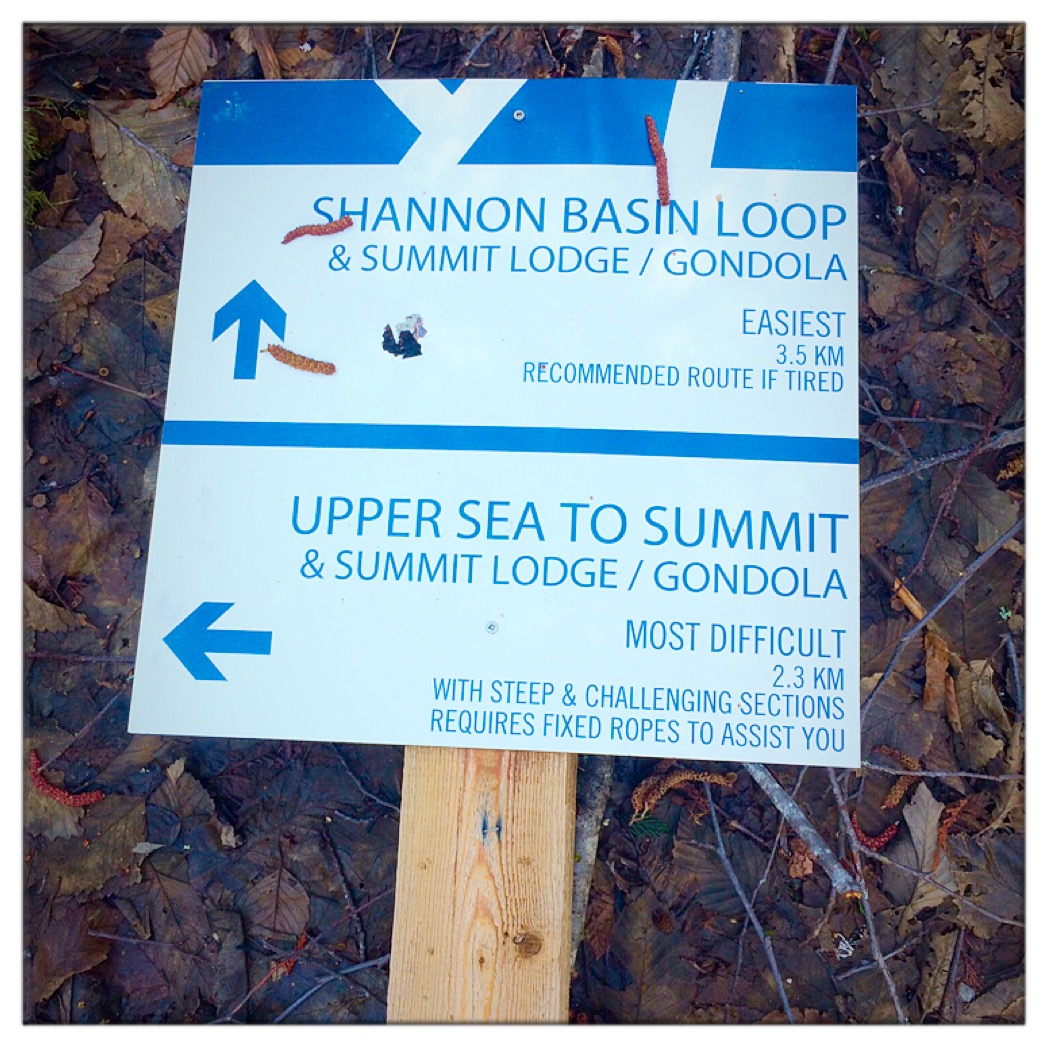
12. The gondola is easier, but so much less rewarding. 


13. But the more difficult route may get you to where you really need to be
13. Sometimes you just need to slog through the mud. Might as well try to enjoy it. 

14. The journey is never really over. To live is to learn. Even at the summit, there are always more paths to take. 
14. Taking a moment to breathe and be grateful. 


Sunday, 20 March 2016

An Invitation to Share

There is nothing more humbling that having a fourteen year old living in your household. In addition to openly scoffing at the number of views my TEDx video has received, my son has informed me that my talks can be "a bit of a downer" and that all I do is make people cry. Nice. But I get it. Fourteen year old boys aren't enormously receptive to heartfelt conversations. And he's right, we tend to learn best when we are able to balance some laughter with the tears. His advice is occasionally lacking in tact, but he's definitely got his own unique brand of wisdom. So, despite his sometimes less than glowing feedback on my work, I welcome his perspective, and I quite often seek out his opinion and insight.

This "fourteen year old perspective" has been especially helpful lately as I've continued to explore the relationship between connectedness and student learning and achievement. I speak to educators about the importance of learning our students' stories, in order to best support, celebrate, and build upon their diverse skills and abilities. I passionately believe that before we can move our students forward into new learning, we need to understand where they are now.

But what I have also been reminded of, with the help of my son, is the importance of educators being able to share their stories as well. In a recent conversation, he agreed that he appreciates it when his teachers take the time to learn about his life, his successes and his challenges. That it helps him to connect with his teachers, and ultimately with the curriculum. However, he then added, "But mom, teachers like it when I ask about their lives too...".

Because after all, relationships are reciprocal. Sharing goes both ways.

As beginner teachers, we are often cautioned to maintain our professional distance, to set firm boundaries and expectations with our students. "Don't smile until Christmas" is still a common mantra for "classroom management". Thinking back to when I started teaching, I followed this same advice- I thought that if I let my students see that I didn't have all of the answers, that I was "less than perfect", that it would somehow undermine my role. To me, respect equalled control. Sharing my vulnerabilities with my students seemed inconceivable. Unprofessional. Risky. But maintaining that veneer was exhausting. It wasn't who I am. 

And so, I began to share my stories...

I distinctly remember the first time that I cried in front of my students. I was teaching them how to write a narrative essay, and we were using the generic prompts from past provincial exams as exemplars. The topic on that day was "Beauty can be found in simple things." My students were struggling with the topic, and with the time constraints imposed by the rigid exam format. In an attempt to model the writing process, I told my students that on that day, I would write alongside them, and then be the first to share my finished draft. We put our heads down, and started to write, and at the end of the allotted time, I began to read.

I had written about the birth of my son... my now fourteen year old son. About seeing his brilliantly blue eyes for the first time. About the mixture of wonder and fear that I felt in that moment. And much to my horror, as I began to read aloud, I started to cry... I was mortified. I had broken the "rules" that I had worked so hard to establish with my students. I took a moment to collect myself, and then quickly transitioned into a "safer" portion of the lesson.

But here's what I noticed almost immediately. My students connected with my story. And they felt safe to begin to share their own. By taking the risk of being vulnerable with my students, I gave them permission to do the same. By letting go of some of that rigid "control" that I had established, I gained so much more. It was truly one of the most impactful moments of my teaching career. I understood that I couldn't ask my students to do something that I wasn't willing to do myself.

I'm not suggesting that teachers share every aspect of their private lives. Clear boundaries are important to maintaining respectful, caring relationships in a school community. But by sharing our stories with our students, we invite them to do the same. And in my current role, I see the importance of extending this same practice to my staff. I value their stories, their context, in the same way that I do each of the 1200 students in my school.

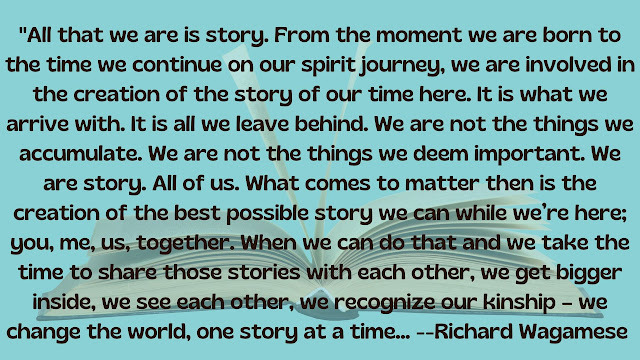
As Richard Wagamese writes, when we "take the time share those stories with each other, we get bigger inside, we see each other, we recognize our kinship -- we change the world, one story at a time..." 


Friday, 4 March 2016

"Why do you do this?"

A typical Friday morning... Standing at the front door of my school saying "good morning" to tired teenagers and tired staff. With less than a week until spring break, everyone is in need of a rest.

But this morning, as I waited to greet the "stragglers" after the second bell, one student stopped as he passed by and came back. 

He said, "Can I ask you something? Why do you do this? Why do you stand out here every morning?

As someone who occasionally struggles to be succinct, I launched into an explanation... That I sometimes feel like I get stuck in my office and don't get the chance to see kids as much as I would like. That I like to check in and see how everyone is doing in the morning. That I appreciate the opportunity to say "good morning" to everyone as they come in...

And then I paused, realizing that this was likely way too much information for a groggy teenager first thing in the morning. 

I finally said, "Why do I do this? Because it makes me happy." 

He responded, "Good answer." and walked away. 

Saturday, 20 February 2016

Problems Solvers & Dreamers

Most school administrators by nature are "problem solvers". On a daily basis, we navigate any number of "problems", ranging from the the predictable, to the extreme. And rather than simply being reactive, we do our best to look ahead, to use our judgement and experience to proactively anticipate and respond to possible challenges or obstacles that might otherwise negatively impact our school communities. It's a necessary and valuable skill set. But at the same time, it's a mindset that's difficult to shake at times.

This past week, I had an opportunity to meet with colleagues to engage in some "big picture" conversations, exploring what the future of education might look like for our students- everything from a redesigned curriculum, to reimagining the physical and digital spaces in which that learning will occur. 

But as we engaged in this dialogue, a pattern began to emerge. One person would propose an idea, and then another would systematically list the possible obstacles and challenges. We struggled to shake that deficit based mindset. And really, it's not surprising, because to some extent this is what we're required to do on a daily basis... We're expected to anticipate and respond to challenges. We are the "problem solvers". But as my friend, principal Rob Laing reminded us, we're also the "blue sky" people, the dreamers

I'm not suggesting that we spend our days with our heads in the clouds, oblivious to the very real challenges that impact our school communities. Sometimes our students need to us to be the "problem solvers".
But sometimes they just need us to DREAM BIG...


Sharing Our Stories

       It is "Back to School" Eve. After over 30 years in education, the feelings of excitement and apprehension are pretty famili...