Showing posts with label Innovation. Show all posts

Tuesday, 24 April 2018

"Re-Purposing" School Structures

"Innovative" is not synonymous with "new".

I had the opportunity to meet with admin colleagues today, in part to continue a conversation about  "re-imagining" teaching and learning in a secondary setting. Previous sessions have included visits to secondary sites in other districts to explore frameworks that extend beyond the "traditional".

In many cases, these are schools that are viewed as incredibly innovative and progressive. And indeed, they are.

But some of the most "innovative" ideas that I heard from colleagues today were not about introducing new frameworks or structures- they were about "re-purposing" existing frameworks.

One Admin team spoke about a process they undertook to re-examine the model of sustained silent reading. Over the years, the school community had evolved in ways that made the traditional model obsolete. However, despite their best efforts, teachers were reluctant to make what was viewed as a signifiant change and ultimately the initiative was voted down by the staff.

But rather than giving up, the team persisted, purposively and intentionally shifting their focus, identifying obstacles and continuing to work with staff to come up with a structure that incorporated elements of the "old", but also introduced some "new" components. They "re-purposed" the model of sustained silent reading. Not entirely new, but most definitely innovative.

A similar "re-purposing" has been occurring at my own school in connection to our Advisory model. A structure that is designed to build meaningful and sustained relationships between students and teachers, over the years some staff and students had lost sight of it's original purpose and intent. Among other indicators, we noticed that students were increasingly late to class, offering the excuse of "it's just Advisory" when they were questioned in the halls. This signalled a loss of purpose and intention in the Advisory classes themselves.

Rather than calling a halt to the Advisory model, we decided to meet with staff and students to explore what aspects of the model they valued, and what aspects they felt were less essential. As a school community, once we had decided on those elements we valued, we then looked at ways to provide additional supports. Gradually, we are "re-purposing" our traditional model of Advisory into a model that is "custom built" to serve the needs of our evolving school community. Again, not new, but I would argue, innovative.

Limited time and resources can be a significant barrier to the successful implementation of new initiatives and structures. But by re-examing and "re-purposing" existing structures, meaningful and sustained innovation is absolutely achievable.


Sunday, 14 January 2018

Three Barriers to Sustained Growth & Innovation

Let me begin with a qualifier...

The following observations are not founded in any specific, research-based evidence. They are, however, the result of my twenty plus years of experience in various educational roles- from special education assistant, to classroom teacher, to teacher leader, to secondary administrator. Each of these roles have afforded me incredibly valuable experiences and insights.

As with many "veteran" educators, I have been involved in the inception and implementation of numerous initiatives and projects over the years. For the most part, each began with the very best of intentions, to improve student learning. But along with this common element, there is, unfortunately, another commonality that many of these initiatives shared. For the most part, they were unsuccessful.

Now I'm the first to acknowledge that "success" can be perceived in a myriad of ways. Many of these "failures" taught the individuals and groups who were involved invaluable lessons that served to inform future initiatives. But they also sometimes served to demoralize and fatigue the members of the organization whose energy and support was integral to success.

So why is it that the majority of initiatives fizzle out and dissipate before sustained implementation can significantly impact student learning? 

I would suggest the following three factors are important contributors.

1. Over commitment. Rather than identifying just one or two areas of focus and actively warding off distractors, schools and districts jump from one initiative to the next. Bill Ferriter  addresses this in his post "Does Your School Have an 'Avoid at All Costs List'?"  I call this the "squirrel" effect. Again, it is well-intentioned. As educators we tend to be incessantly curious and so as each "next best thing" comes along, the temptation to jump on board is difficult to resist. But ultimately, this leads to important projects that fall by the wayside as the next "newer and shinier" initiative comes along.

2. Leader turn-over. Whether it's at the district or school level, the frequent movement of individuals in leadership positions can have a destabilizing effect. Although I strongly believe that an influx of "fresh blood" can be a powerful spark for innovation and growth, frequent changes in leadership can sometimes halt initiatives just as they are beginning to gain momentum. While skillful leaders do their best to ensure continuity by establishing frameworks that outlast their presence in an organization, often their eager and again, well-intentioned replacements bring with them their own unique set of visions and goals. Many of us have experienced the disorienting and sudden "shift" that can accompany a change in leadership.

3. Lack of clear vision. This one seems obvious, but somehow it remains as the most significant barrier to sustained and successful growth and innovation. There are a number of factors that can contribute, including the two that I've identified above. But this may also be the result of competing or conflicting visions within an organization. With this comes a level of frustration and disconnect on the part of key stakeholders who find themselves pulled in numerous directions. This "tug-of-war" can have an immobilizing effect. In "Leading Change" I discuss other necessary attributes, but the ability to identify and articulate a clear vision is at the forefront of successful leadership.

As I continue my learning and leadership journey, I am mindful of these observations as I work within my own school and district to support student learning. Ironically, many of these insights are the result of mistakes that I've made along the way, accompanied by subsequent self-reflection and readjustment. But ultimately, I believe that as long as we are all willing to acknowledge and learn from past experiences, there really is no such thing as failure.


Sunday, 2 July 2017

Four Essential Elements of a Successful School Community: The Non-Negotiables

As I'm in the process of transitioning to a new school community, I've had numerous conversations with individuals over the past several weeks, often rooted in their speculation around what will be "different" about the students, staff and structures at my new school.

While it's true that each school context is unique and comprised of diverse needs, challenges and strengths, I would suggest that there are certain elements that form the foundation of all successful school communities.  These are what I identify as the "non-negotiables".

1. Relationships as a foundation.

Students and staff need to feel connected and cared for. In her article "If You Want Students to Learn, They Need to Feel They Belong", author Tricia Taylor highlights the importance of relationships in creating a sense of belonging in school communities.
"Cognitive scientists explain that belonging is important because when we belong, we feel safe, and a safe brain is ready to learn. On the other hand, when the amygdala, the part of the brain responsible for regulating stress, feels threatened or is on high alert, information is then blocked from freely entering areas of higher cognitive memory consolidation and storage. A safe brain allows for a growth mindset and better executive function, which means being better able to make mistakes/take academic risks; having a higher level of self-efficacy (more willing to set higher goals, etc.); and practising more self-control, which results in less conflict. We are also better able to persevere and think hard about tasks."  
2. An environment where students and staff are encouraged to learn and take risks. 

If students are the only ones who are learning, that's a problem. We need to model the same curiosity and desire to learn that we hope to instil in our students. That means taking the time both individually and as a staff to identify potential areas of growth.  In The Innovator's Mindset, George Couros talks about the need to "embrace" the "messiness" of learning. By modelling a willingness to take risks and extend our own learning, we create a culture that sees "not knowing" as an opportunity rather than as a deficit. This is a powerful example for our students.

3. A culture of collaboration. 

We're all in this together. Ultimately, we all have the same goal- to support the social, emotional and academic success of our students. An impossible feat if we attempt it on our own. But collectively, we can provide the myriad of supports and opportunities that are necessary to meet the needs of a diverse student population. This means carving out the time to connect with colleagues, families and community organizations. The success of our students is a shared responsibility. 

4. A focus on joy and positivity. 

This might seem naive to some, but in a system that tends to be more focussed on what needs to be fixed, rather than what is going well, it's important to take the time to be joyful, and celebrate our successes. 

In his book, Embracing a Culture of Joy, Dean Shareski writes the following:
"Doing joyful things might be the most important work we do. And when leadership in particular makes it clear that joy for joy's sake is important, then culture begins to change. Maybe we can be better, more humane, more just and more joyful than the real world. What a great lesson and model for our students."
The reality is that there is no one "right answer" when it comes to identifying the elements a successful school community. But I would suggest that it is essential to have the conversation. What do your parents, your students, your staff identify as their "non-negotiables"?


Sunday, 9 April 2017

Connecting the Dots

Do you remember the "connect the dots" pages we used to work on when we were kids? You know, the ones where you had to search out the consecutive numbers in order to connect each dot to the next. Ultimately, when all of the dots were connected, the bigger picture would reveal itself. Some were relatively simply, with the picture already apparent without having to draw the lines between each dot. But some were far more complex, the bigger picture a mystery until more lines were drawn between the seemingly unrelated points, gradually revealing the completed picture. As a child, I would sometimes get frustrated with the complexity of these more intricate pages, losing my way as I searched out the next "dot". Sometimes I would persist. And sometimes I would give up.

In any large organization or district, we are faced with a similar task...

We are presented with numerous tasks and initiatives which on the surface, may seem unrelated or disconnected. I would argue that our job as school and district leaders is to help to connect the dots for our staff and school communities. We need to help others to see the bigger picture. We also need to ensure that we are taking a close look at any new initiatives that we are developing to see how they align with our "bigger picture". If we don't, we risk that same frustration that I faced as a child. If we want individuals to persist, or better yet, to take ownership of new initiatives, we need to be selective in what we are asking them to do, sometimes functioning more as a filter than a conduit.

This analogy extends to the classroom. As teachers, we need to explicitly connect skills and content to the world beyond the classroom. We need to help our students to see the bigger picture, the relevancy of what they are learning. Again, if students aren't able to see these connections, they can become frustrated by seemingly unrelated tasks. But by "connecting the dots" and providing our students with greater insight into the purpose behind what we are asking them to do, they become partners in their learning, rather than simply passive and compliant participants.

The reality is that some things just need to get done and that not every task or initiative is inherently connected. Sometimes we aren't privy to the bigger picture ourselves. And sometimes we just have to trust that the bigger picture will reveal itself in time... But whenever possible, if we are able to communicate our purpose, our "why" to others, we can avoid some of the frustration and fatigue that can serve as a very real barrier to meaningful growth and innovation.

Wednesday, 22 February 2017

Leading Change: Getting it Done.


We know that meaningful, impactful change takes time. It requires thorough consultation and careful planning. Depending on the scope of the initiative, this consultation and planning stage may span the course of several months, even years.

However, there a comes a time in every initiative when it is simply time to get it done. It's been my experience that this can be one of the most challenging transitions for an organization- the point at which the abstract becomes reality and dialogue transforms to action.

Given that for most organizations a considerable amount of time (and money) has likely been invested in the consultation and planning stage, it's not difficult to understand why there might be a great deal of anxiety and uncertainty associated with the implementation stage of any significant change initiative. At the point at which implementation is on the horizon, individuals are fully invested, often on an emotional level. Again, this is understandable, even necessary. Passion and commitment are integral for the successful implementation of any initiative.

It is at this stage that I find it most necessary for decisive, courageous leadership. (I shared what I believe are the necessary attributes to lead change in one of my previous posts.Someone has to be willing to take the leap. It is that often uncomfortable step into the unknown. It invites the possibility of failure. It's a incredibly hard step to take. No question.

But sometimes we lead change. And sometimes we need to give it a little shove. To get it done.


Sunday, 29 January 2017

The Tipping Point


A tipping point is defined as "the critical point in a situation, process or system beyond which a significant and often unstoppable effect or change takes place."

This concept can also refer to the point at which anomalous acts become the norm.

Most often this concept is referenced in connection to negative acts- crime, racism, pollution...

But instead, how can we harness the power of critical mass in connection to acts of positivity?

What is the tipping point at which kindness and compassion become the norm and intolerance and hatred an anomaly?

What can we do to shift the balance?

Here's the answer.

Every kind word, every act of compassion, every good intention can move us closer to that tipping point.

Each of us has the power, the responsibility, to tip the scales.

What will you do to help?


Friday, 6 January 2017

Weighty Expectations

It's ok to quit. It's ok to stop doing something that others have come to expect you to do. It's ok to change your mind, to have second thoughts. It's ok to say no.

I'm saying this after a week of observing largely well intentioned challenges and directives to make resolutions and set goals. In addition to these "New Year's" challenges, many individuals are already struggling under the enormous pressure of maintaining expectations that they established in previous years. The weight of others' expectations, intermixed with our own self imposed standards, can be suffocating. Debilitating even.  

We are so incredibly hard on ourselves.

I'm not suggesting that goal setting and establishing high expectations, both for ourselves and for others, is not a valuable and necessary exercise. Although I'm not a big fan of New Year's resolutions, I am a firm believer in taking on new challenges and opportunities, of finding your "edge" and pushing beyond it... But sometimes the weight of either self imposed or external expectations can make it difficult, almost impossible, to change our current trajectory, to re-evaluate, re-assess and forge a new trail. 

I see the impact of these weighty expectations not only on my family, friends and colleagues, but on the students in my school community. With anxiety and mental health issues on the rise, how are our expectations of our students' contributing to this trend? Are our students forging their own paths to success, or simply following a route that others have mapped out for them? Are they pursuing interests and passions that fulfil their purpose and goal, or are they obediently complying with others' expectations of what they should be? 

In the end, I truly believe it's about finding a balance...allowing ourselves to be inspired, motivated and challenged by others, but also giving ourselves permission to shift course, to forge a new path in unexpected and uncertain directions. 

I'm still working to find that balance and although I have more questions than answers, I'm pretty sure it's not something that can be encapsulated in a New Year's resolution or accomplished within the timespan of the year. So I'm giving myself (and others) permission to take their time, to make mistakes, to risk disappointment and even failure. Because some of my most incredible and rewarding opportunities have come to me "by mistake". 

So, here's to more questions than answers, to the journey ahead, to a year filled with possibility and potential... 

Happy New Year. :)


Saturday, 29 October 2016

From Traditional to Transformative

How do we foster transformative teaching and learning within existing traditional structures? 

While curriculum changes are leading us towards significant change, the reality is that many schools and districts are still constrained by traditional structures that could pose significant barriers to meaningful growth.

Traditional structures can encompass everything from the concrete, (the physical spaces of our school community) to the less tangilble (closed mindsets).

Let me begin with one example of the concrete...

While the physical space of a school community does not necessarily impede transformational teaching and learning, it can pose a significant challenge. Traditionally designed as a collection of "little boxes", how do we encourage and support teachers and students to move beyond the walls of their classrooms to engage in collaborative learning experiences?

As part of the West Coast Regional Exchange, facilitated by Stephen Hurley and Max Cooke from the Canadian Education Association (CEA), I had the opportunity once again to marvel at the beauty of our venue Norma Rose Point, a school which was designed for teacher collaboration. Although principal Rosa Fazio is quick to point out that it is more about the mindset than the physical space, I couldn't help but think about the impact that teaching and learning in such a space might have on the hearts and minds of the members of that school community. This thinking was extended through a conversation with the head teacher of an alternate program. He shared his struggle to convince "his kids" that they were valued within a physical space that was aging and run down...

Yes, transformative teaching and learning can and should happen within traditional and sometimes less than ideal physical spaces, but I don't believe that we can discount the impact, both positive and negative, that those spaces can have on staff and students. Not an insurmountable barrier, but something to be considered.

Other traditional structures might include elements such as timetables, staffing and budget constraints and ministry guidelines.

Should a bell schedule really signal the end of learning?

With the integration of a new curriculum in BC, we have an amazing opportunity to continue to transform learning for our students. But it's not enough to simply squeeze a new curriculum into our existing traditional structures. I would suggest that if teaching and learning does not begin to look significantly different in BC schools, then we will have failed our students.

We now know better and so we need to do better

There are no easy answers. But we must continue to have these conversations. What are the non-negotiables within our districts and school communities- those elements which we are unable to change? And what are the elements that we are able to address and transform to facilitate the types of learning experiences that we know are best for our students? 

As Stephen Hurley reminded members of the CEA west coast regional exchange, "an issue is where an opportunity and a challenge meet." So, rather than viewing existing traditional structures as insurmountable barriers to transformational teaching and learning, we can instead view these as opportunities for innovative and creative solutions. I look forward to continuing this conversation, both with my colleagues in BC, across Canada, and globally. 


Saturday, 27 August 2016

Leading Change

Whether you're a school based administrator, a teacher leader, or part of a district senior management team, leading in times of change is different. Leading change is significantly different than navigating change. Or simply surviving it.  The reality is that leading while maintaining the status quo doesn't involve the same complexities and challenges that are associated with moving into uncharted territory. As Captain Kirk would say, leading change means going boldly where no one has gone before... As such, I would argue that it requires a unique set of skills and abilities.

Reflecting on my own experiences and through my ongoing conversations with colleagues, the following are attributes that I believe are necessary to lead change.

1. Passion. Enthusiasm and conviction is infectious. The ability to inspire and motivate others, especially when change can involve difficult decisions, is essential. Although we need those around us to ultimately take ownership of any new direction or path, a leader's passion can spark the initial movement and momentum.

2. Transparency. Trust and open communication is integral to any organization. Individuals need to understand why change is necessary, what the intended outcome is, and how we're going to get there. They need to be partners in the process, not simply passive participants. As well, the reality is that not every initiative is successful. Leading change means admitting that we don't have all of the answers, that we make mistakes. If we have worked to foster trusting relationships with those around us, individuals will continue to support us during more difficult times.

3. Resilience. There will never be a scenario where change is embraced wholeheartedly by an entire organization. Leading change means being able to shoulder dissenting opinions and sometimes outright hostility. Sometimes described as a "thick skin", the ability to not take "personal attacks" personally is key. Leaders need to be able to maintain a calm and consistent demeanour.

4. Empathy. Change can be unsettling. It can be a time of uncertainty and flux. Even when the changes that are being implemented are leading to something better, leaders need to understand that leaving behind familiar routines and expectations can lead to anxiety, even anger in some individuals. Leaders also need to be empathetic towards those individuals who are simple unable to accept change. They can't let that halt their progress, but they can treat these individuals with patience and compassion.

5. Courage. Even with the knowledge that change is necessary to move our schools and districts forward, it can be overwhelming to face the prospect of leading during transformative times. For those of us who have experienced significant change, we know that it can be "messy". Leaders may feel the same anxiety and ambivalence as those around them. But they have the confidence and courage to embrace those feelings of uncertainty with the understanding that it means they are moving forward into new learning and growth.


Saturday, 20 August 2016

One More Thing

We all get a little lost sometimes. We lose sight of our purpose, our goals. We get bogged down in the minutia of our busy days and frustrated by seemingly unending demands on our time and energy.

In education, there is always "one more thing". The latest trend, technology or curriculum change. These pressures explain why as "back to school" approaches, my teacher friends are sharing posts filled with a mixture of excitement-tinged anticipation... and anxious dread. And why at the end of June, one of my admin colleagues shared that his goal for the school year had simply been "to survive". Disheartening, perhaps. But understandable. This job can be overwhelming at times. And sometimes we can lose our way...

So as the school year begins, how can we balance our responsibility (yes, responsibility) to facilitate and embrace innovation and change, and the very real sense of fatigue and frustration that is often voiced by educators? As someone who wants to continue to support and facilitate growth in my school community and district, how can I justify adding "one more thing"?

Here's how...

Such a gift.
I ran into one of my old students today. This is a rarity for me, as I've changed schools and districts. More often than not, I send a student on their way at the end of grade 12 and I never see them again. So today was a gift. Not only because I got to see this particular student, who gave me a huge smile and an even bigger hug. But because sometimes I lose my way a little bit too. I get bogged down in the minutia of my day. I feel overwhelmed and anxious.

So with the school year about to begin, today's chance encounter was an incredible reminder of why I continue to push myself to do more. To do better. And why I continue to encourage and support my staff to take on "one more thing". Today I was reminded that I helped shape who this young man had become...

You see, every single day, we make a difference. We impact the lives of children. We help shape the future. What an incredible privilege. But with that privilege comes a responsibility. The responsibility and willingness to take on "one more thing", to embrace change, to move forward with intentionality and purpose. It can be overwhelming. And exhausting. But take a look at that young man's smile...
It is so worth it. 

So if you discover at some point this year that you have lost your way, I hope, like me, you are given this gift. This reminder of why we do what we do. And I hope that helps you to find your way back. Because our students need us. And for that reason, I will continue to do one more thing.


Monday, 25 July 2016

Dare to Be.

Although many of us are still blissfully immersed in the warm and hazy days of summer vacation, I was reminded by a post from my cousin whose children attend school in Arizona that for some of us, school has begun. I've had conversations in the past with colleagues about the back to school dreams that seem so prevalent among many educators, from beginners to experienced. Sometimes triggered by that first "back to school" commercial, anxiety tinged dreams often stem from a desire to do our very best for our students

As someone who finds it challenging to fully embrace rest and relaxation, (I'm working on it) my mind is never far away from planning and dreaming for the year ahead. I'm fortunate to work at an amazing school, with dedicated staff and highly motivated students. But as is always the case, there is room for growth. There are things we could be doing better

So in the midst of setting some goals for the year ahead, here's what I noticed... I divided my goals into two categories: "plans" and "dreams". Somehow I differentiated between these two- "plans" being those practical, concrete goals that are safe, attainable, achievable. And "dreams" being those that are risky, abstract and perhaps more challenging to achieve. "Plans" are safe. "Dreams" are risky. 

In life, and as part of my professional journey, I've learned that if I'm avoiding a conversation with someone, it's probably a conversation that I need to have. As a school administrator, I've had to learn to have those difficult conversations. They're never easy. They're often uncomfortable. But in the end, they are important conversations that need to happen. And they often result in meaningful and important change. 

See the connection? 

By categorizing some goals as "dreams", I was giving myself permission to push them off to the side, to "avoid" them. Which likely means they are exactly the goals that I need to be working towards. 

For many of us, we allow ourselves to dwell in the safe harbour of attainable goals. But in order to support meaningful change in our schools and districts, we need to push ourselves to dream. As Greg Satell writes in a recent post, we need to "dare to be crap". Greg's reference was in connection to creativity, but I think it applies to any undertaking that requires an element of risk. 

Scary stuff. But if I want to help my amazing school community be even better, we're all going to need to "dare to be..." Dare to be creative. Dare to be innovative. Dare to do things differently. Dare to fail. Dare to try again. 

So in the midst of these hazy, warm days of summer vacation, perhaps we can all spend just a few moments in the hammock, on the dock, in the deck chair, dreaming about what we are going to "dare to be" in the year ahead...
To create successful school communities, we need to "dare to be..."


Wednesday, 11 May 2016

It's Happening

At the risk of confirming Dean Shareski's assertion that I'm "old", I have nonetheless been in the field of education for a few years now. In addition to my own formative (and somewhat challenging) experiences as a student, I was an educational assistant for four years, a classroom teacher for seventeen, and am currently making my way through my first full year as an administrator. Similar to many experienced educators, in that time I've experienced countless new initiatives, frameworks and platforms. And I've also heard the voices of those who suggest that despite the "new", not much has actually changed...

Perhaps I'm naive, or just extremely fortunate to be surrounded by forward thinking, innovative, and transformative individuals (which I am), but here's my take on change-

It's happening. 

Don't get me wrong, there's definitely room for continued growth and certainly there's no cause to slow our momentum, but I would suggest that education is undeniably evolving, gradually responding to the needs of our students and of our global community.

I created the visual below simply as a method to capture some of the transformations that have challenged, informed and inspired my ongoing professional growth.

Ok, here's my disclaimer and my invitation...

First, the disclaimer- this is by no means intended to be a definitive "list" of paradigm shifts or instructional innovations. Nor is it meant to be a dichotomy, a "good vs. evil" of the evolution of education. As we all know, it's not as simple as that. It's just a way for me to make sense of some of the transformations that I've witnessed, and an opportunity to acknowledge (and thank) some of those "forward thinking" folks I mentioned above. This visual reflects my perspective, my lens. Likely by the time I hit "publish" I will have additions and revisions to make. But that's the beauty of learning. It's fluid.

Now, the invitation- just as I enjoy WestVan Superintendent, Chris Kennedy's "Top 3 Lists", I appreciate the opportunity to gain insight into what contributes to other's thinking and growth, into what inspires, irks and motivates those around me. Again, I'm fortunate to be connected to many individuals who willingly and generously share their learning with me, and I welcome the opportunity to connect with even more.

So while this type of overview is typically a "new year's" or a "year end" kind of thing, I find myself with a little time to ponder and reflect. A silver lining and a gift...


Monday, 28 March 2016

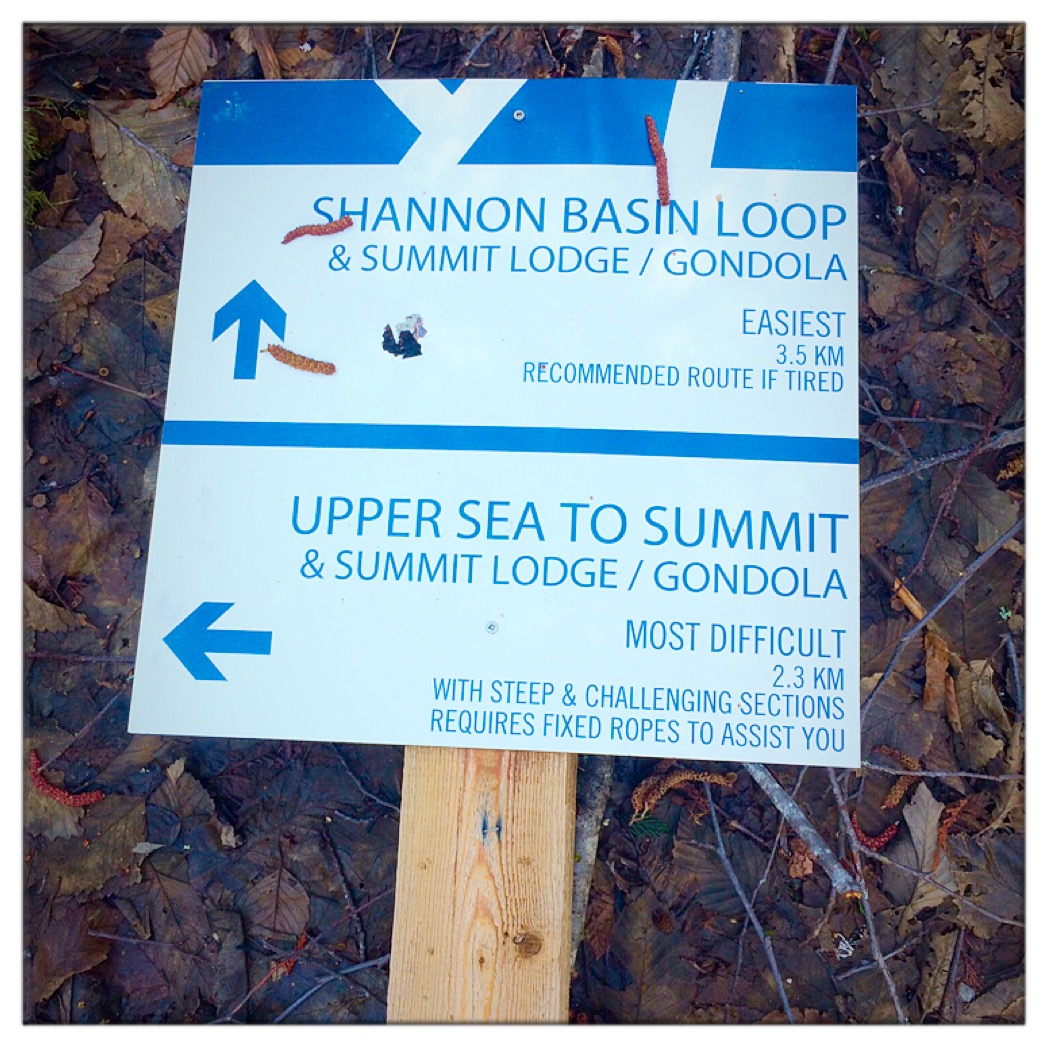
Learning, from Sea to Summit

I learn so much from others. But for me, having the time to process and reflect on what I've learned is essential. Hiking provides me with an opportunity to do just that. It gives me some time to think, offers a good metaphor for some of my insights, and reminds me of how much I still need to learn. 

So, a little of what I have learned...

1. There is difference between taking risks and being reckless. Although it's impossible to prepare for every eventuality, it makes sense to gather as much information before hand as possible. A solid plan and the right tools can make all the difference.
1. My travelling companion. Hiking on my own means I need to take precautions and be prepared.

2. There are times when it's necessary to put your head down and just power through. But there are also times when you need to pause to look up, take a breath, and make sure that you're still on the right path. Sometimes there are clear markers to guide you, and other times the path is less obvious. 
2. Thank goodness for trail markers. 

3. There will be seemingly insurmountable obstacles. But overcoming adversity often leads to innovative solutions and amazing opportunities
3. Can't go over it. Need to go around it. 

4. Periods of darkness and fear are inevitable. There are times when you will be certain that you're on the wrong path, that you're headed in the wrong direction...
4. The creepy part. Reminds me of the forest with the monkeys in the Wizard of Oz.

5. But have faith. Darkness can be followed by great beauty and light
5. So beautiful.

6. Being mindful of limitations is a strength, not a weakness. It is only by recognizing our limitations that we can continue to learn and grow. 
6. Wouldn't it be helpful to have signs like this in life? "Just a heads up, there's some hard crap ahead, so..."

7. Independence and confidence are important. But there are times when you will need some help to continue to move forward
7. I've learned when to grab the rope. 

8. As much as you plan ahead, unforeseen circumstances will arise. Often these are beyond our control. The only thing that we can control, is how we respond
8. Yup. Snow. Awesome.

 9. Take the time to appreciate and celebrate when the path is smooth and things are going well.
9. A different view around every corner.

10. And be grateful for the little things that make the journey a bit less treacherous. 
10. Stairs. Helpful. 

11. It's important to find a balance between looking ahead and staying rooted in the present. Focussing only on the path ahead can cause you to lose your footing. 
11. Sometimes it seems easier to go across the log. Except when it's slippery. 

12. There will always be an easier way...
12. The gondola is easier, but so much less rewarding. 


13. But the more difficult route may get you to where you really need to be
13. Sometimes you just need to slog through the mud. Might as well try to enjoy it. 

14. The journey is never really over. To live is to learn. Even at the summit, there are always more paths to take. 
14. Taking a moment to breathe and be grateful. 


Saturday, 20 February 2016

Problems Solvers & Dreamers

Most school administrators by nature are "problem solvers". On a daily basis, we navigate any number of "problems", ranging from the the predictable, to the extreme. And rather than simply being reactive, we do our best to look ahead, to use our judgement and experience to proactively anticipate and respond to possible challenges or obstacles that might otherwise negatively impact our school communities. It's a necessary and valuable skill set. But at the same time, it's a mindset that's difficult to shake at times.

This past week, I had an opportunity to meet with colleagues to engage in some "big picture" conversations, exploring what the future of education might look like for our students- everything from a redesigned curriculum, to reimagining the physical and digital spaces in which that learning will occur. 

But as we engaged in this dialogue, a pattern began to emerge. One person would propose an idea, and then another would systematically list the possible obstacles and challenges. We struggled to shake that deficit based mindset. And really, it's not surprising, because to some extent this is what we're required to do on a daily basis... We're expected to anticipate and respond to challenges. We are the "problem solvers". But as my friend, principal Rob Laing reminded us, we're also the "blue sky" people, the dreamers

I'm not suggesting that we spend our days with our heads in the clouds, oblivious to the very real challenges that impact our school communities. Sometimes our students need to us to be the "problem solvers".
But sometimes they just need us to DREAM BIG...


Wednesday, 17 February 2016

Root to Rise

Finding my edge, on the summit of Mount Baker. 
The one constant in my life is change
As such, I've become accustomed to that somewhat uncomfortable feeling that tells me that I'm on the edge of new understanding. I've learned to welcome that feeling, even to seek it out. Having experienced the other side, the amazing growth and insight that comes from pushing past that discomfort, I've gradually learned to embrace change.

But at the same time, I've also come to understand that I can't impose my eagerness, my desire to move forward, onto others. I can share my vision, my passion and my story, but ultimately, individuals must discover their own unique path forward. However, as a school leader, I can help to support the members of my school community as they find that path. And in the same way, I can continue to seek out their support as I move forward in my own learning.

The Innovator's Mindset by George Couros
In yoga, there is a saying, we must root to rise. Essentially, this is a reminder that we need to first ground ourselves in the present, in order to move forwards. Our "roots" provide the stability, the essential foundation that all potential growth results from. If we remain fixated in the past, or alternatively, are only focussed on the future, we lack the stability to initiate meaningful, sustained growth. In yoga, as in life, it's about finding a balance...

Translated into an educational context, rooting to rise suggests that before we are able to integrate new, potentially transformative instructional and assessment practices, we must first have an understanding of where we are now. I am privileged to have been welcomed into a school community that has a rich history, with many valued traditions. As such, it is essential that I take the time to understand the context, the culture, the story of where I am now in order to best support my staff and my students as we move forward into new learning, and new understanding.

Let me just close by stating the obvious, which is that I haven't come to this understanding on my own. As I've made note of in previous posts, I have many teachers in my life. Wise, patient people who generously listen, advise and support me as I continue to make my way on this journey. My hope is that I am able to repay this kindness by providing the same gentle guidance for others.


Saturday, 16 January 2016

It All Comes Down To This....

In the midst of hectic schedules, and seemingly unending demands on our time and energy, we sometimes lose our way. We get tired. And frustrated. And impatient.

And then something happens. It's usually something small, something that on any other day would go unnoticed. A student holding a door open for us. A smile in the hallway. A high five in the parking lot. 

And then suddenly, we remember. It's about the kids. And it's all worth it. 

Because it all comes down to this...
One question:
What's best for our kids?
One rule:
Do whatever we can to support them.


Saturday, 9 January 2016

Uncovering Creativity

I have a hard time quieting my mind. Although I've practiced yoga for a number of years now, I still struggle with meditation. Instead, I revel in the more physically challenging poses, the ones that push me to find the edges of my strength and flexibility. But ask me to lay still, to quiet my mind, and I'm enormously challenged. Savasana is one such pose that requires a stillness of mind and body. For me, it is by far the most difficult pose. It forces me to strip away the worries and wonderings, to shift into a mindful state of calm and focus.

It strikes me that as a school leader, I need to facilitate this same mindful state of calm and focus in my school community. Often, when we talk about innovation, we tend to focus on providing our staff and students with additional skills and tools. We invest in technologies and professional development that will add to our skills and abilities. But I would argue that innovation is as much about stripping away as it is adding to. If staff and students are already feeling burdened and overwhelmed by the numerous tasks and responsibilities that fill their days, how likely are they to achieve a mindset that will allow for creativity and innovation? 

I believe that this mindful state of calm and focus exists naturally within each one of us. And so, in addition to facilitating the acquisition of new skills and abilities, my role is also to help to strip away some of the burdens that sometimes stifle this natural state of creativity and innovation. With this in mind, I would argue that my challenge is two-fold: to be looking ahead towards continued growth and innovation, but also to be firmly rooted in the present to ensure that I am effectively managing the numerous tasks and responsibilities that are so essential to the functioning of a dynamic school community. My hope is that by working to alleviate some of the more burdensome tasks and responsibilities that might act as obstacles, I can help to uncover this natural state of creativity and innovation that already exists within each one of us.

Tuesday, 29 December 2015

Would I Want to Be a Teacher in My Own School?

One of the most significant shifts that I faced as I made my move from classroom teacher to vice principal, was the realization that I needed to dedicate as much time, care, energy and attention towards the adults in the building as I do to the students. As a classroom teacher the focus is primarily on the students sitting in front of you- and rightly so. It is an enormous responsibility and challenge to create the optimum learning conditions that will ensure that each individual child receives the emotional, social and academic support that they need for their continued growth and learning. As a classroom teacher, I was enormously impacted by this question, poised by Dave Burgess-
If your students didn't have to be there, would you be teaching to an empty room?


I can distinctly remember that moment, and the thought that popped into my head. It was,"Oh crap." Because it forced me to be honest about what I was trying to achieve as a classroom teacher. Was I just trying to get by, to survive, to make my way through the never ending mountain of marking? Or was I trying to empower a generation of engaged and thoughtful global citizens?

I was once again reminded of this challenge when reading The Innovator's Mindset, by George Couros. Couros suggests that in order to create the conditions for innovation and growth, we need to ask ourselves some essential questions, including-
Would I want to be a learner in my own classroom?

As someone who struggled in school myself, as a teacher, I challenged myself to create the learning conditions that would have kept me motivated, engaged and excited about learning. Even after 17 years in the classroom, I still found this a daunting task. 

But again, the shift for me as a school administrator was that it's not only the students that I serve, it's the teachers.  Dean Shareski closes his recent blog post, "Professional Learning is Messy" with this question- 
How do you and your leadership create conditions and opportunities for you to listen?

Dean argues that some of the best professional learning results from opportunities to sit and listen, to hear from passionate individuals, the "smart people" who push us to actively engage with new thoughts and ideas. So like the "perfect storm", each of these elements have challenged me to extend George Couros' question to the following:

Would I want to be a teacher in my own school?

I'm not big on resolutions, and like most educators, my "new year" began in September. But as we move into 2016, I am resolved to help create the conditions in my school that would have inspired, motivated and supported me as a classroom teacher. I am resolved to serve the adults in the building with the same care and attention as I serve the students. No small task. I will make mistakes. It will likely be messy at times. But I also resolve to be as patient with my own learning, my own growth as I was with my students'. To be honest, for me, that's likely the bigger challenge.
I'll let you know how it goes...

Friday, 20 November 2015

The Goldilocks Zone of Leadership

The "Goldilocks Zone" refers to a habitable area of space in which planets can conceivably support liquid water, a key ingredient for life. It is the optimal proximity to a star- neither too close, nor too far. It's just right.

Similarly, the challenge of leadership requires us to find that same optimal zone. Effective, innovative leaders must work to create that "just right" environment in which staff and students feel supported and inspired to be their best selves, to take risks and to explore new opportunities. My ongoing challenge is to determine that "just right" level of support. Too much can leave staff and students feeling overwhelmed and undervalued. Too little can lead to stagnation and disengagement.

I'd like to say that I've discovered the perfect balance, that just right zone. But leadership is not a perfect science. There's no exact measurement, no fail safe formula that can be applied to a vibrant and dynamic school community. Because a school community is comprised of a myriad of complex and variable elements, the most essential and the most complex of which is the human element. 

Fortunately, I'm not alone on this journey to find this "Goldilocks Zone"- the place that provides optimal conditions for learning, innovation and growth. I have help. I can continue to rely on the advice and support of my mentors. I can reflect on the open and honest feedback of my colleagues. And I can listen carefully to voices of my students. The key ingredients...
Not too much.
Not too little.
Just right.


Thursday, 13 August 2015

On the Edge


I am fortunate to have some incredibly wise people in my life. And although I'm notorious for being a bit of a "loner", fiercely independent, and let's just say, a wee bit stubborn, I have come to understand that I need these people in order to continue to learn, to grow, and to expand my perspective of the world around me.

I was recently reminded by one such wise individual of the saying, learning happens on the edge of understanding. The challenge for me is to figure out where that edge is. It means something different for each of us, and it is often a scary and uncomfortable place to be. It should be. Because it means taking a risk, pushing past the familiar, the "known" and charging into uncharted territory. Scary stuff for sure. But as scary as it is, I have gradually learned to embrace, even seek out that feeling. Rather than allowing myself to recoil, to pull back, I have learned to teeter on that edge for a moment, and then force myself over the precipice, on to the other side. Sometimes I can do this myself, and sometimes I need a gentle shove. It's always uncomfortable. It's always scary. And usually the landing on the "other side" is less than graceful, more often than not accompanied by a few bumps and bruises. But, the rewards are enormous!

I've been fortunate over this past year to have had several opportunities to find my edge and to push beyond it to experience new learning, new understanding. Whether it's through yoga, climbing a mountain, or challenging myself professionally, I am learning that although it's often a scary and uncomfortable place to be, with the patient support and guidance of some very wise people in my life, it is also kind of awesome. My intention for the year ahead is to continue to reflect, to explore, to risk and to find new edges...

What's your edge?


Sharing Our Stories

       It is "Back to School" Eve. After over 30 years in education, the feelings of excitement and apprehension are pretty famili...